Examining Behavioral Analytics Integration for Identifying Risk Patterns During Bonus Redemption Across Mobile Gaming Applications
Lars Klein · Sep 19, 2026
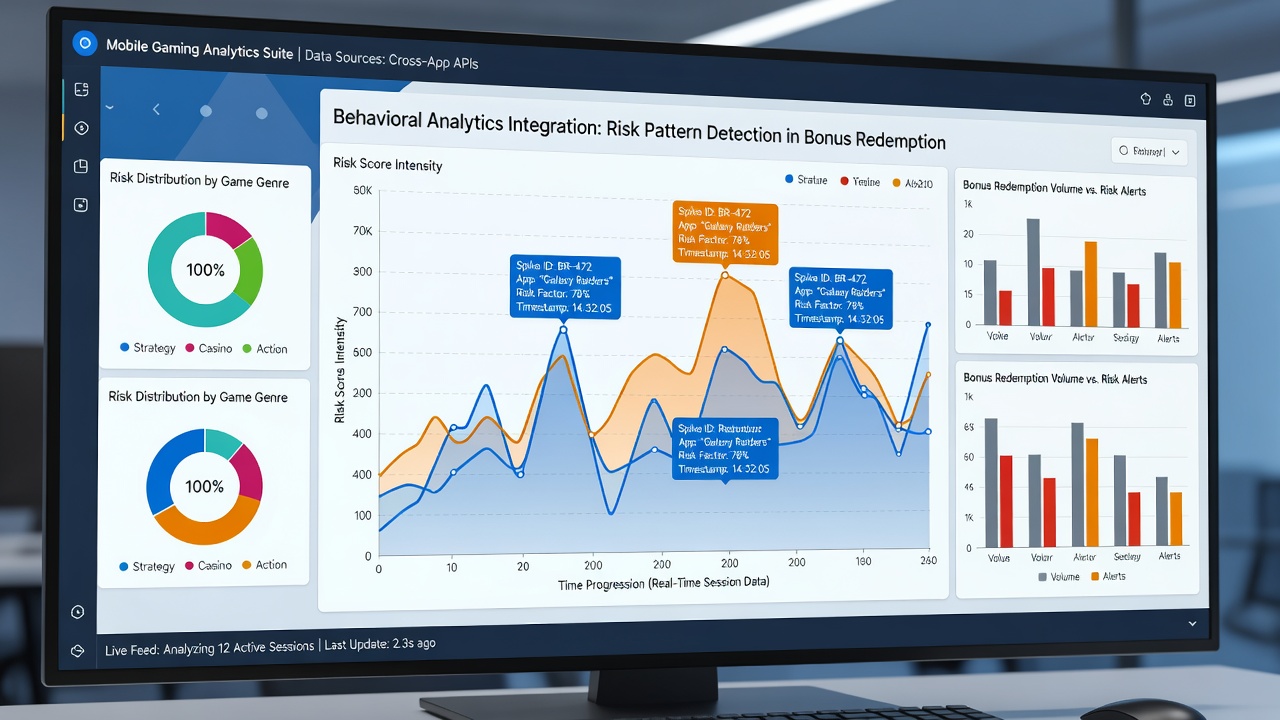
Examining Behavioral Analytics Integration for Identifying Risk Patterns During Bonus Redemption Across Mobile Gaming Applications
Behavioral analytics tools now track player interactions across mobile gaming platforms with increasing precision, focusing on bonus redemption sequences that often reveal irregular activity. Developers integrate these systems to monitor variables such as redemption frequency, account linkage patterns, and session timing, which together form datasets capable of highlighting potential risk indicators. As of September 2026, several major operators have expanded these capabilities in response to regulatory updates in multiple jurisdictions.
Core Components of Behavioral Analytics Systems
These platforms collect telemetry from user devices including device fingerprints, IP address clusters, and behavioral biometrics like tap speed or navigation paths during the redemption process. Machine learning models then process this information against historical baselines to flag deviations, such as rapid successive redemptions across multiple accounts that share similar device characteristics. Researchers at institutions studying digital gambling environments note that combining these signals with transaction metadata improves identification accuracy without requiring manual review of every case.
Integration typically occurs through APIs that connect gaming engines to analytics engines hosted in secure cloud environments. Operators in North America and parts of Europe have adopted standardized data schemas that allow cross-platform comparison, although implementation details vary by company size and regulatory requirements. Data from the Nevada Gaming Control Board shows increased adoption rates among mobile-focused licensees during the first half of 2026.
Identifying Specific Risk Patterns in Bonus Redemption
Common patterns include velocity-based anomalies where users complete redemptions at rates exceeding established thresholds for legitimate play, often accompanied by minimal engagement in core game mechanics. Another category involves geographic inconsistencies, such as accounts claiming bonuses from locations that contradict previous login histories within short timeframes. Observers note that these signals become more reliable when tracked over rolling windows rather than single events.

Account clustering represents a third area of focus, where algorithms detect groups of profiles exhibiting synchronized redemption behavior suggestive of coordinated activity. Studies from the Australian Institute of Criminology have examined similar datasets in regional markets and found correlations between clustered redemptions and higher instances of disputed transactions. Integration of these findings into live systems allows operators to apply graduated responses ranging from temporary holds to full account reviews.
Technical Implementation Across Different Platforms
Android and iOS ecosystems present distinct challenges for data collection because of differing permission models and privacy frameworks. Developers address this through consent-driven tracking modules that activate only after explicit user agreement during app onboarding. Real-time processing pipelines then stream events to central repositories where models retrain periodically on fresh data batches.
Some providers layer additional context from third-party services that specialize in fraud scoring, while others rely on proprietary models trained exclusively on internal gameplay logs. The choice often depends on the operator's existing infrastructure and the specific regulatory environment in which the app operates. Those who've studied deployment timelines report that full integration typically requires three to six months of calibration before stable performance metrics emerge.
Regulatory Context and Data Sharing Practices
Regulators in several regions now request summaries of behavioral analytics outputs as part of routine compliance reporting. This development encourages operators to maintain auditable logs of model decisions and the data points that triggered alerts. International bodies focused on gaming integrity have begun discussing standardized metrics that could facilitate information exchange between jurisdictions while respecting local privacy statutes.
One study released by researchers affiliated with the University of Nevada, Reno examined how shared indicators across operators reduced duplicate investigations of the same risk patterns. Such collaboration remains limited by competitive concerns and differing legal obligations, yet the underlying technical approaches continue to converge.
Conclusion
Behavioral analytics integration for risk pattern identification during bonus redemption continues to evolve alongside mobile gaming technology and regulatory expectations. Current implementations combine device-level signals, transaction histories, and machine learning outputs to surface anomalies in ways that earlier manual processes could not achieve at scale. Ongoing refinements in data handling and cross-platform compatibility suggest further developments will follow established trajectories through late 2026 and beyond.